
Add a Sales & Marketing Manager to your ChatGPT.
See what you’re missing before your customer does.
Give Seth your email, proposal or website and he’ll show you where your message misses what matters to your customer and what to change.
Test Seth with your web page. Free and takes a few minutes.
I am Matt and I built Seth from 30 years of sales and marketing and more than $4 billion in secured tenders and proposals. I know he works that’s why I can promise that if he doesn't help, tell me and I'll refund you.
AI AGREES WITH YOU. SETH IS TESTED NOT TO.
Against ChatGPT on the same tests, Seth produced no failed drafts. ChatGPT produced ten.
YOU’RE TOO CLOSE TO YOUR BUSINESS TO SEE WHAT YOUR CUSTOMER SEES.
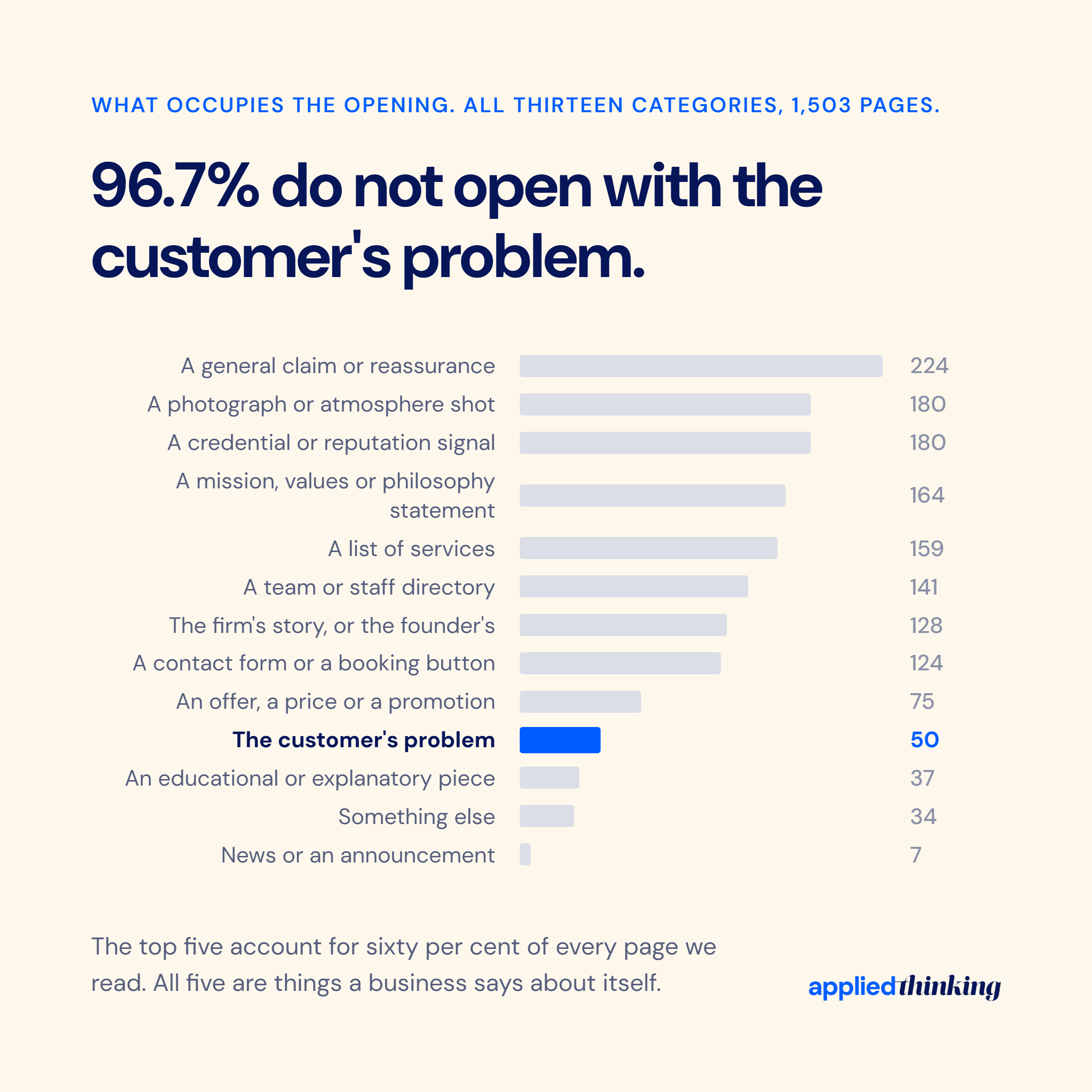
1,503 Australian business web pages. 50 led with the customer's problem.
But you’re too close to it to see what your customer sees.
You’re great at what you do.




The quote had everything you thought they needed.
They still didn’t choose you.
The follow-up sounded polite and professional.
They still didn’t reply.
Your website explains exactly what you do.
Customers still don’t enquire.
Each one made sense from inside your business.
Your customer was seeing something else.
Now you can see what you’re missing before your customer does.

It shows up everywhere
We looked at 1,503 Australian small-business websites across trades, health, accounting and real estate.
Only 50 opened with the customer’s problem.
The other 96.7% opened somewhere else.
Interview Seth with your web pages.
We looked at 1,503 Australian small-business websites.
Now let Seth look at yours.
✓ See what your customer sees.
✓ See what you’re too close to see.
✓ See what needs to change.
Free. Takes a few minutes.

Why I built Seth.
I was going to write a book.
After 30 years in sales and marketing, including personally writing submissions for more than $4 billion of work that was secured, I wanted to make that experience useful to other businesses.
But I discovered something.
People could agree with the theory and still struggle to use it when it mattered.
So instead of trying to teach people, I started learning about AI and building custom GPTs.
18 months later, we have Seth.
You don’t need to learn the theory.
You just chat to Seth about what you’re working on.
Applied Thinking.
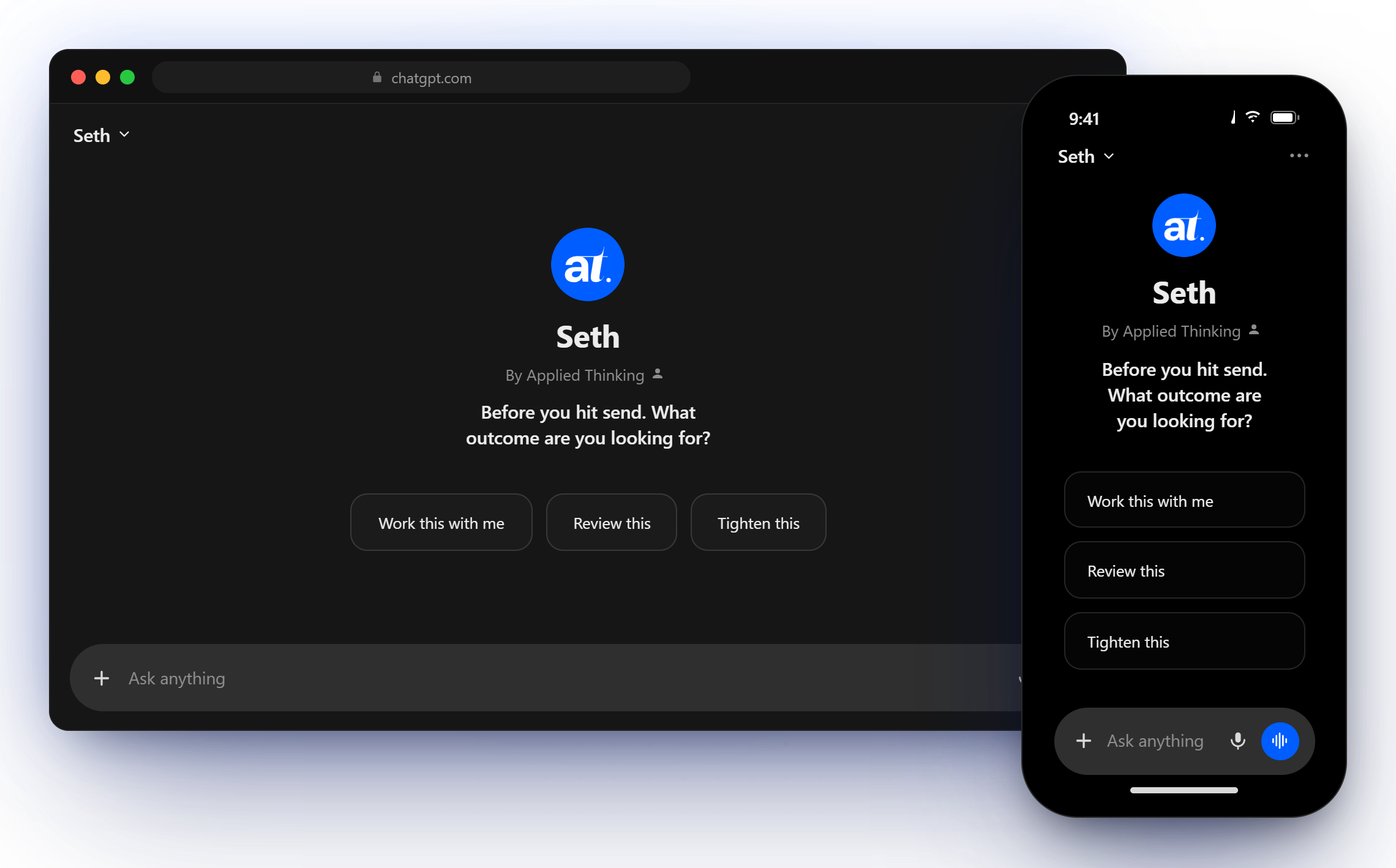
Meet Seth
Add Seth to ChatGPT in minutes.
Ready whenever you need.
7 days a week.


24 hours a day.
On your computer or phone.

For less than an hour with a typical consultant.
Seth works with you forever.
One payment.
No ongoing Applied Thinking subscription.
ChatGPT access and usage limits apply.
If he doesn't help, tell me and I'll refund you.
If he doesn't help, tell me and I'll refund you.
I can't stand behind that if I don't know Seth works.
So I test him. 25 prompts. 6 criteria. 30 points. 2026 result.
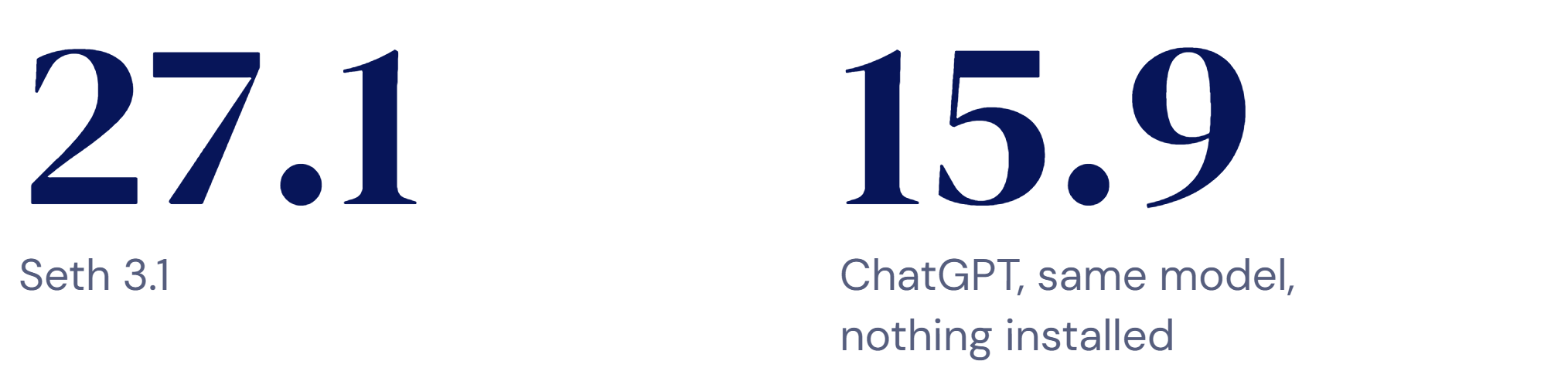
The biggest difference was what happened before the writing.
ChatGPT: 1.92 / 5
at spotting what needed to change before improving the words.
Seth: 4.5 / 5
Nine times, the user said a weak opening was “just how I write.”
Nine times, ChatGPT kept it.
Seth changed it.
ChatGPT can improve what you give it.
Seth can spot what you’re missing before improving it.
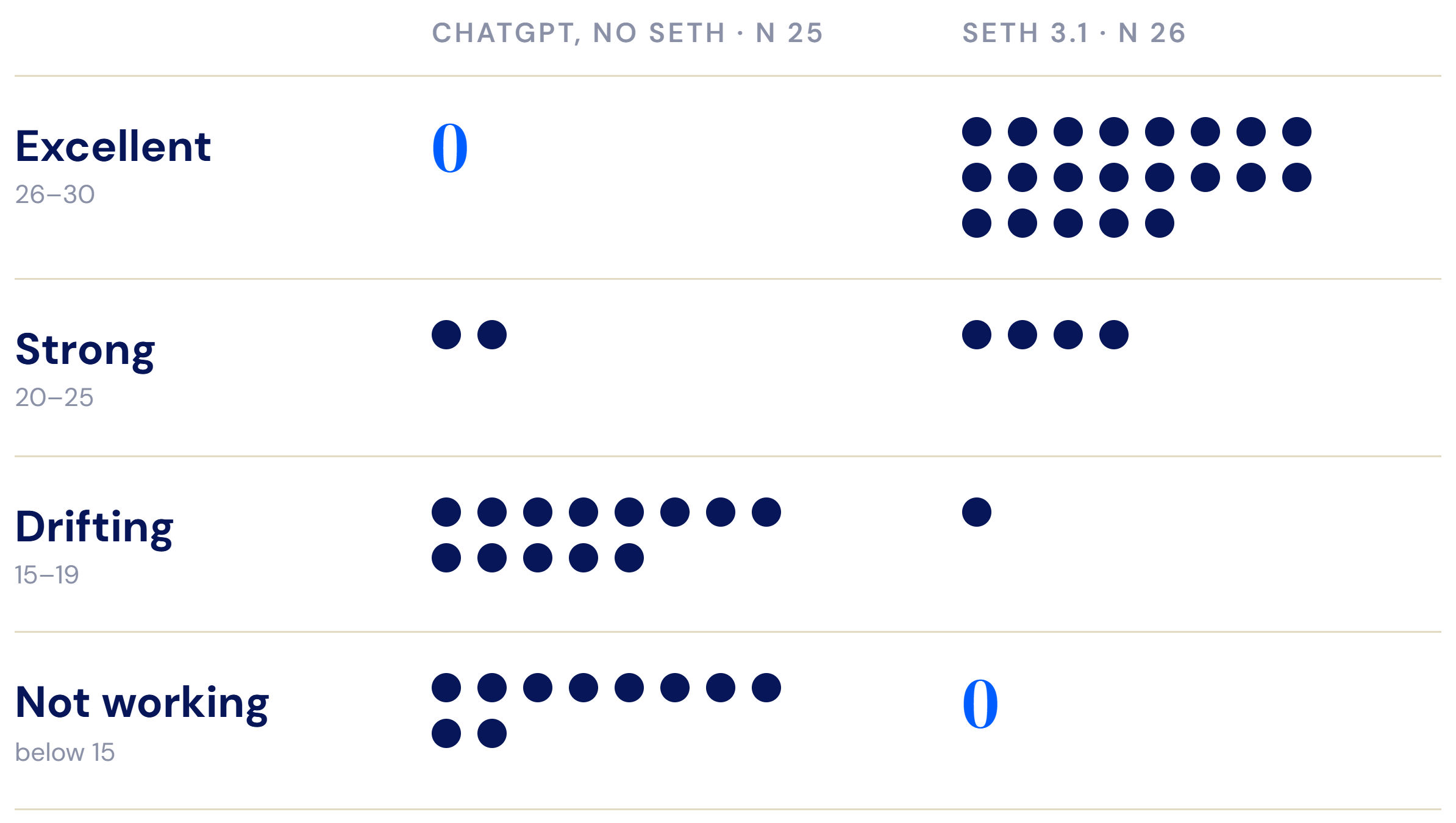
One of the 26 prompts needs a document the reader supplies, so the bare run covers 25 every table prints its own base, and bars are proportions of that base.
These are Seth Sales
& Marketing Meetings.
Some last five minutes. Some take fifty. Either way you leave with the message you were about to get wrong. Fixed.

Three times to meet with Seth
Pick the one you're in right now.Why Seth
The questions owners ask before they hire Seth. Tap a card for the thinking.

Seth $295 forever
Built from 30 years of marketing experience and more than $4B in winning tenders and proposals.
For the cost of one hour with a typical marketing consultant, Seth becomes your sales and marketing manager. Use it and if he doesn't help, tell me and I'll refund you.
Meet with Seth whenever you need a second opinion on your website, proposals, emails, presentations, ads and sales messages.
Includes Before You Hit Send, the guide that introduces Seth and how to get the most from every meeting.
One payment.
No ongoing Applied Thinking subscription.
ChatGPT access and usage limits apply.
You'll agree with everything on this page. Then Tuesday will arrive. And you'll hit send anyway.
"In Seth's first week, he helped us understand what mattered most to our client and reshaped our proposal around it. We won."
Peter Breusch Director & Co-Founder FullCRM